Your debts are all discharged, meaning they are written off by your creditor (the person or organization you owe them to).
Of course if you have a secured debt, which is a debt that is secured against an asset, such as a Housing loan and you decide that you would like to keep the debt through your bankruptcy, then the Bank will maintain title over the asset and you won’t be discharged from that debt but will maintain it and as long as you keep paying it off you can maintain the asset.
All other debts will be written off except for a few such as fines for breaches of the law (eg: speeding fines), debts arising from fraud, maintenance payments and Child Support, some debts due to Centrelink and accumulated HECS (Higher Education Contribution Scheme).
Complete a FREE Bankruptcy Evaluation
If you have an existing ABN when you become bankrupt, the trustee will advise the Deputy Commissioner of Taxation of your bankruptcy.
The Tax Office will note the date of your bankruptcy against the ABN. If you wish to continue to use the ABN you will need to contact the Tax Office and arrange to have your ABN reactivated.
Regardless of Bankruptcy you will still be responsible for lodging your BAS Statement.
There is no restriction on applying for an ABN after becoming a bankrupt.
Complete a FREE Bankruptcy Evaluation
If you owed the tax office at the time of your bankruptcy, any refund you are entitled to during the period of bankruptcy may be retained by the tax office to offset the amount owing.
Tax refunds owing to you prior to the date of your bankruptcy can be claimed by the trustee.
Tax refunds owing to you during your bankruptcy will be treated as income for income assessment purposes.
After discharge, any debt still outstanding to the tax office which formed part of the bankruptcy cannot be recovered by the tax office.
Tax refunds after discharge may be retained by you.
Regardless of bankruptcy you are still responsible for lodging your Income Tax Returns.
Complete a FREE Bankruptcy Evaluation

Yes you can,
however, you will need to let your Bankruptcy trustee know that you wish to travel overseas and obtain their permission.
This is only for the term of the Bankruptcy and very very seldom is permission not granted for overseas travel to a bankrupt.
Complete a FREE Bankruptcy Evaluation
Debt agreements such as a Part 9 or Part 10 may be an option for individuals struggling with crippling debt.
However, it is important to seek advice on your situation as in some cases organisations may recommend Debt Agreements for reasons other than it being the best solution for their client.
If you are currently in a debt agreement and are struggling to make the repayments, then it is important to seek further advice.
If you cannot continue to service your debt agreement the you can arrange to be released from it.
If you have found yourself in this situation, simply complete our Online Evaluation Form and if you choose, we can help you out of your debt agreement and into a Fresh Start through Bankruptcy.
Complete a FREE Bankruptcy Evaluation
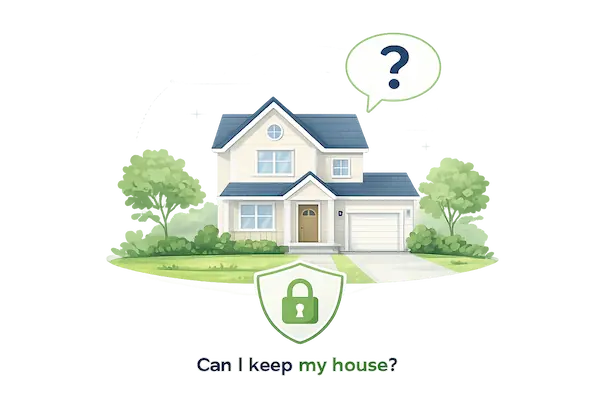
Property automatically vests Property automatically vests in a bankruptcy trustee upon their appointment. This means that they will be registered on the property title.
If you reduce the mortgage balance, or the property increases in value, the trustee will receive this benefit. It is therefore crucial to act quickly if you want to arrange a related purchase of your property interest from your bankruptcy trustee.
The trustee will usually give any co-owner the first opportunity to purchase the bankrupt estate's equity interest in the property. Otherwise the trustee will seek to agree with the co-owner to list the property on the market.
If no agreement can be reached, the trustee may apply to court for a statutory trustee to sell the property.Even if there is no or minimal equity in the property, the co-owner can seek to remove the trustee from the title by purchasing the bankrupt estate's interest in the property.
This means that the co-owner will then benefit from their mortgage payments and any increase in property value.
Property can be a complicated matter when it comes to Bankruptcy, so be sure to speak with us if you need clarification or assistance.
Complete a FREE Bankruptcy Evaluation
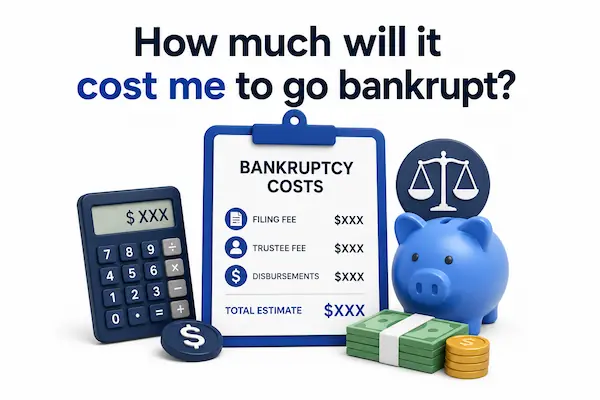
The cost depends on how much needs to be done. We have “Do It Yourself Bankruptcy” where we provide you with the necessary paperwork, you complete it and return it to us for processing and lodgement. This is ideal for simple bankruptcies where there are no assets involved.
Bankruptcy costs increase according to the complexity of each individual case and once we have your information we can give you a firm price. Some of the factors that will affect the cost of a bankruptcy are:
Call us or complete the “Bankruptcy Evaluation Test” and we can give you an accurate price.
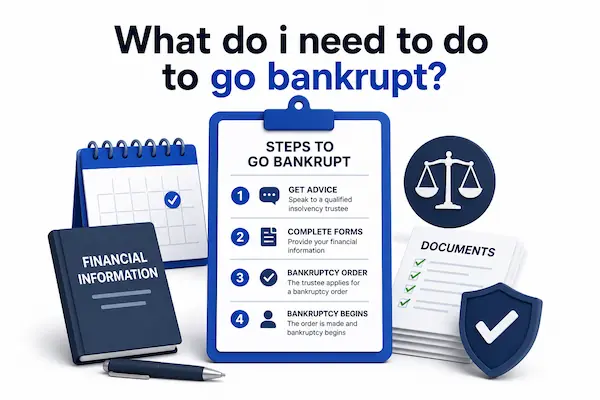
We make the process of Bankruptcy as simple as possible for you. However, be sure to either call us or complete the Bankruptcy Evaluation test before you make any decisions.
Your Bankruptcy can all be completed on line with us. After we have collected the necessary information from you over the telephone, we then complete a number of forms with you, including a Bankruptcy application. You do not need to attend a meeting in our office, talk to the Police, get a Lawyer, talk to a Magistrate or any of those overwhelming tasks. We understand it is a stressful time and we will take care of everything for you.
Once we have collected your information and completed the necessary forms you will need to sign them. We will arrange for the forms to be delivered to you. You simply sign each form as required and then return it to us. We then lodge your forms with the necessary authorities and you usually receive your bankruptcy file number within a few days. That’s right, within a few days. At last it will all be over and you will be able to sleep in the knowledge that the slate has been wiped clean and that you are able to start again.
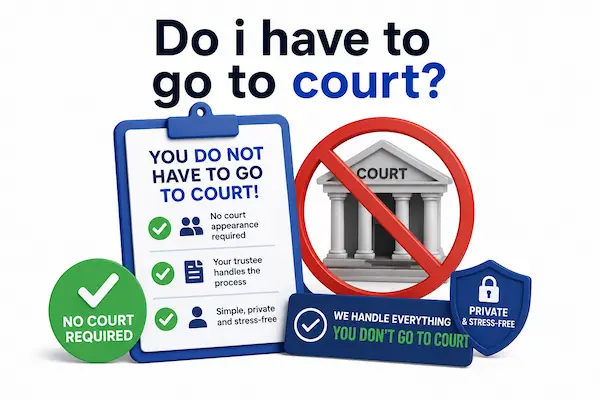
You won’t be charged as a criminal, you won’t have your name splashed all over the media and up in lights. The process of bankruptcy is a very personal process.
Yes, your bankruptcy will be recorded on your personal Credit file for 5 years, but all things going smoothly, your actual bankruptcy only goes for a period of 3 years and after 3 years from the date it is processed, you will be able to go out and apply for a loan or whatever you need. This is called your discharge date, or the date your Bankruptcy is discharged.
Once your Bankruptcy is discharged, you will not need to attend court. You will simply receive a letter informing you that your bankruptcy has now been discharged.
It is as though you have just been financially born again. A wonderful feeling.
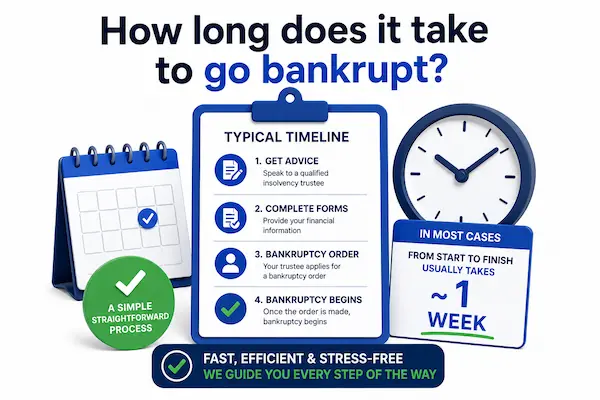
Once the paperwork is complete you can be filed for Bankruptcy within 72 hours. Once your bankruptcy application has been approved you will receive a Bankruptcy File Number and this number is given to your creditors (people you owe money to). Once they have your bankruptcy file number they are no longer allowed to contact you for payment. Imagine, suddenly no more harassing telephone calls or nasty letters. It all stops.
It may take a little longer if your case is very complicated, however, even in most complicated Bankruptcies, we can arrange your Bankruptcy within a week or so.
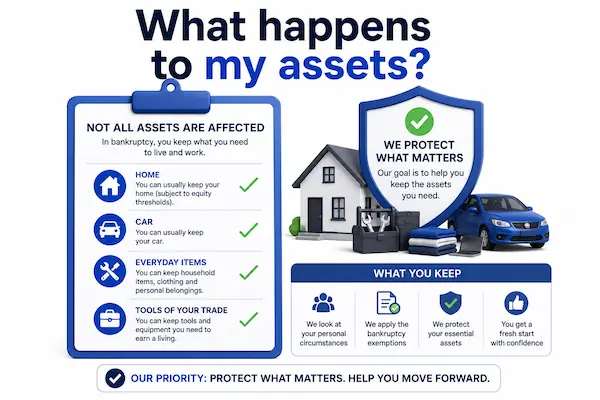
That depends on what they are. If you own a house, a car, a boat, a jet ski, a motor bike or anything MAJOR in value you need to call us so that we can work out the best option for you.
In most cases you are able to keep your personal motor vehicle. This of course depends on the value of the vehicle but very seldom are cars lost through the process of Bankruptcy.
As for your household furniture, you will keep this. Bankruptcy is not as it used to be. In the past you would lose everything you owned of value. Today, you keep your household furniture and personal items. Yes, that includes your Big Screen TV and stereo!
If you are a Trades person or have tools of trade, in most cases you will also be able to keep most or all of these up to a specified value. Simply call us to find out more.
While there are certainly consequences to Bankruptcy, many potential Bankrupts have heard horror stories and rumours of others who were kicked out of their rental home or booted out on to the street in a matter of days from the home they were buying, while someone came in and rifled through their personal household belongings. This doesn’t happen. Bankruptcy is an opportunity to start again, not a death sentence!
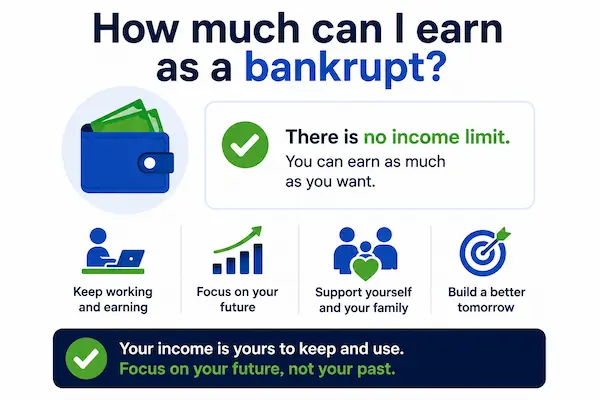
Some people will tell you you can’t earn anything as a bankrupt because it all gets taken off of you… this is RUBBISH.
You can earn as much as you want as a bankrupt.
However, there are some earning “thresh holds” that apply to you for the term of your bankruptcy that you need to be aware of. Once you reach these thresh holds you will need to pay the Trustee (The trustee is the Individual or organization that is administrating your bankruptcy) 50% of everything you earn above this amount. This money is then paid back to your creditors (The people you owe money to).
Here is the current threshold limit:
Remember, there is no limit to the amount that you can earn as a bankrupt, it simply means that anything you earn OVER that amount MAY be subject to you losing 50%.
If this thresh hold is a concern to you simply contact us and we can advise you on options that may be available to you.
The fact is you can earn as much as you want as a Bankrupt, hey even a Million dollars a year. Remember, you have no debt hanging over your head, so if you are having success in earning money, good luck to you! What’s exciting is that you can begin saving again!
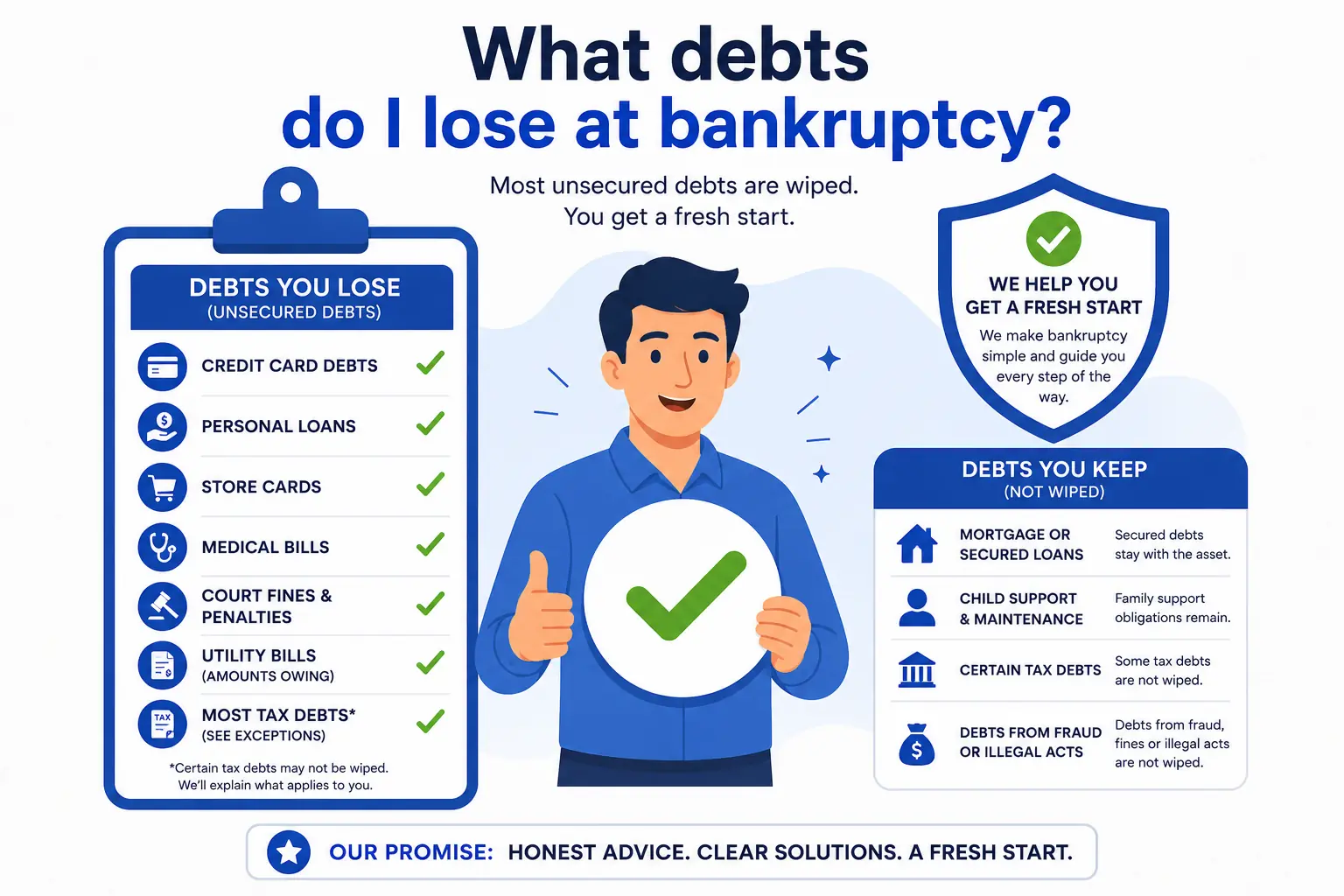
The only debts that are not negated are:
Other than these few things, all your other personal debts are negated at Bankruptcy. You will be placed into the hands of a Trustee and they will ensure that you are not chased for debts that you have had negated at Bankruptcy. If someone bugs you, you simply report them.
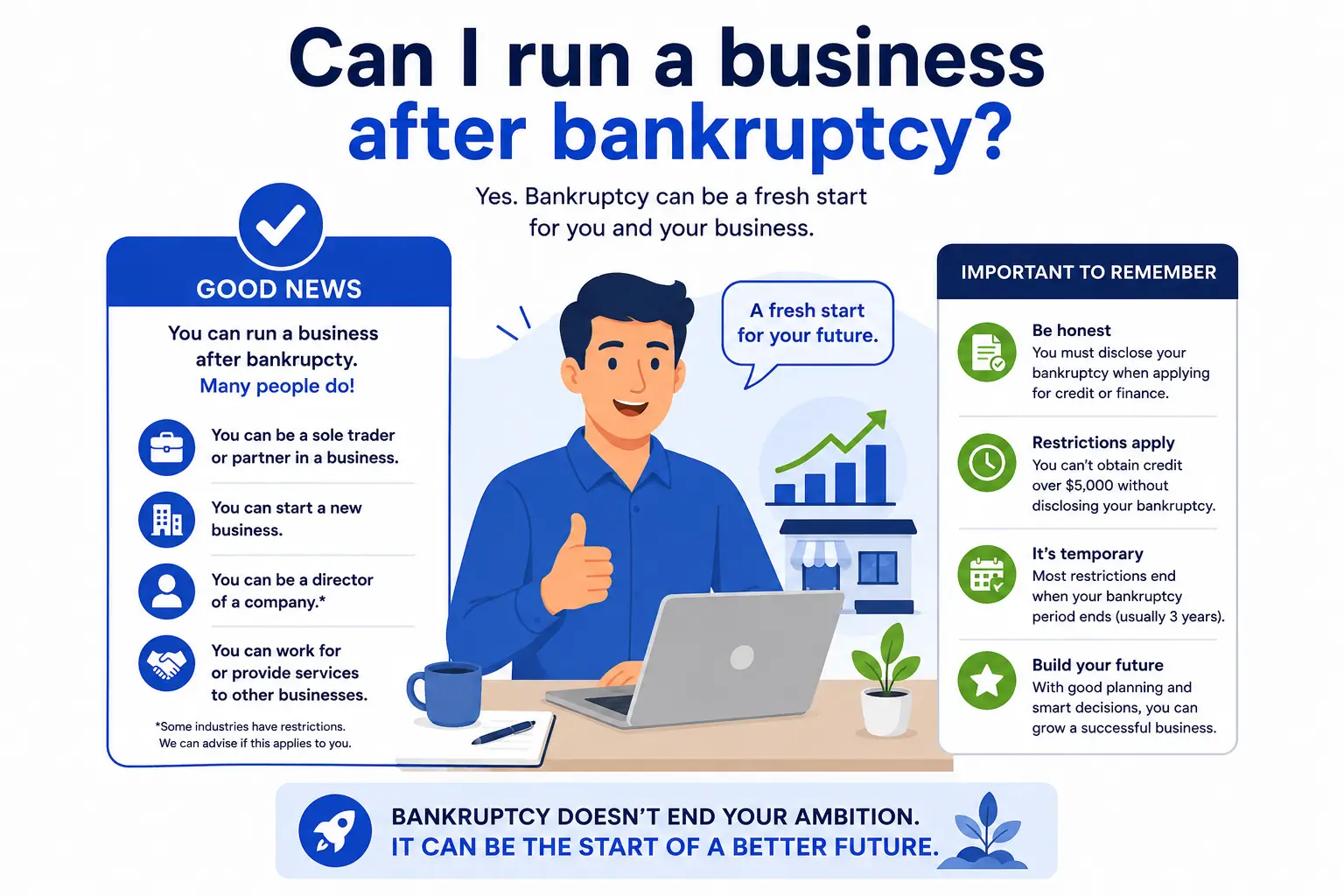
Many of our clients have run their own businesses for many years and continue to do so after they have declared themselves bankrupt. The only difference is that part of the bankruptcy regulation is that they are not able to be the “Director” of a company until their bankruptcy is discharged, which usually happens after a period of three years.
During this time they trade as a sole trader, under their own name and as soon as their bankruptcy is discharged they restructure their business back into a company.
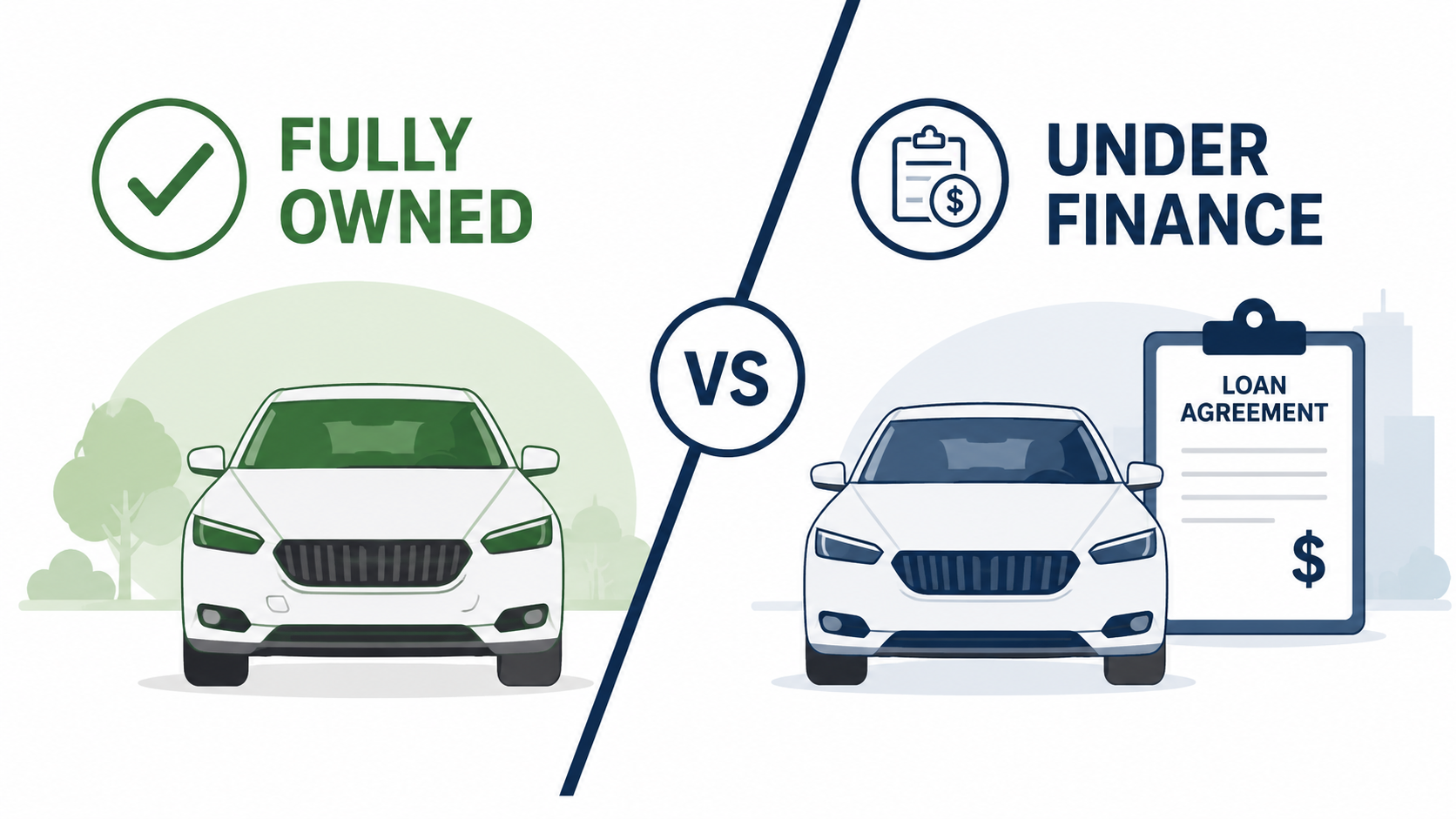
If your vehicle is worth more than $8,000 and there is no finance on it, you may still be able to keep it by using one of these options
Option 1:
you may be able to speak with your Bankruptcy Trustee (the person who looks after you during your bankruptcy) and ask them if you can pay off the difference over the term of your bankruptcy. Here’s an example. Let’s say that your vehicle is worth $15,000 and you would like to keep it. You could speak with the trustee and let them know that you realise you can only keep a car up to the value of $8,000 but that you would like to keep the car and pay off the difference over the next year or two. Often you will find the Trustee very helpful and accommodating and will be more than happy to work with you on this. (We are also happy to negotiate this for you)
Option 2:
You could simply hand the vehicle to your trustee. He can then arrange for it to be sold and once it is sold your trustee will give you back $8,000 from the sale of the vehicle and pay the rest of the money to your creditors. (People you owed money to.) You can then use this $8,000 to go and buy another vehicle.
What if my vehicle is financed
If your vehicle is under secured finance the situation is quite different. Here are the usual scenarios that exist regarding financed vehicles and Bankruptcy.
Scenario 1:
Often you will find that you owe more on the vehicle than what it is worth. If this is the case and your finance company agree to let you keep the loan, then you can keep the vehicle so long as you continue to pay the loan. (That’s right, you can choose to keep a loan even if you go bankrupt!)
Scenario 2:
If your vehicle is worth up to $8,000 more than you have left on your loan and your finance company agree to let you keep the loan, then you can keep it. For example, if you have a vehicle worth $20,000 and your loan is only $12,000 you can keep the vehicle as you only own $8000 worth of the equity in the vehicle. If you are unsure, ask us.
Scenario 3:
If the vehicle is worth $8,000 or more than the loan, then you will again need to work something out with your Trustee to pay off the difference. (We are happy to negotiate this for you if you want us to.)